Showing posts with label reading curriculum. Show all posts

Tuesday, August 18, 2015

Using Independent Work Binders in the South African Mainstream Classroom

Independent binders are a great way of helping the learners in your class develop independent learning. This, I find particularly true in a special needs environment. Not only is it true, it is also an essential part of a special needs classroom.
But, while I realise just how important this is in my special needs classroom. I began thinking about how they can be used in a mainstream class. 

Create centers in your class
Have an area in your classroom which your learners are able to access throughout the day. In this area, place a learning activity (read:binder) which your learners need to complete at some point throughout the day. In order to do this, laminate the pages of the binder you would like to use, and supply the area with whiteboard markers for your learners to use. This activity may be math, literacy, or life skill related. It may even be an art activity. Not only, are you able to assess their level of independence, but also their level of task initiation, and task completion. 

It may also keep those fast workers occupied for a little while, and give you some time to work with your weaker learners. 

Make flashcards
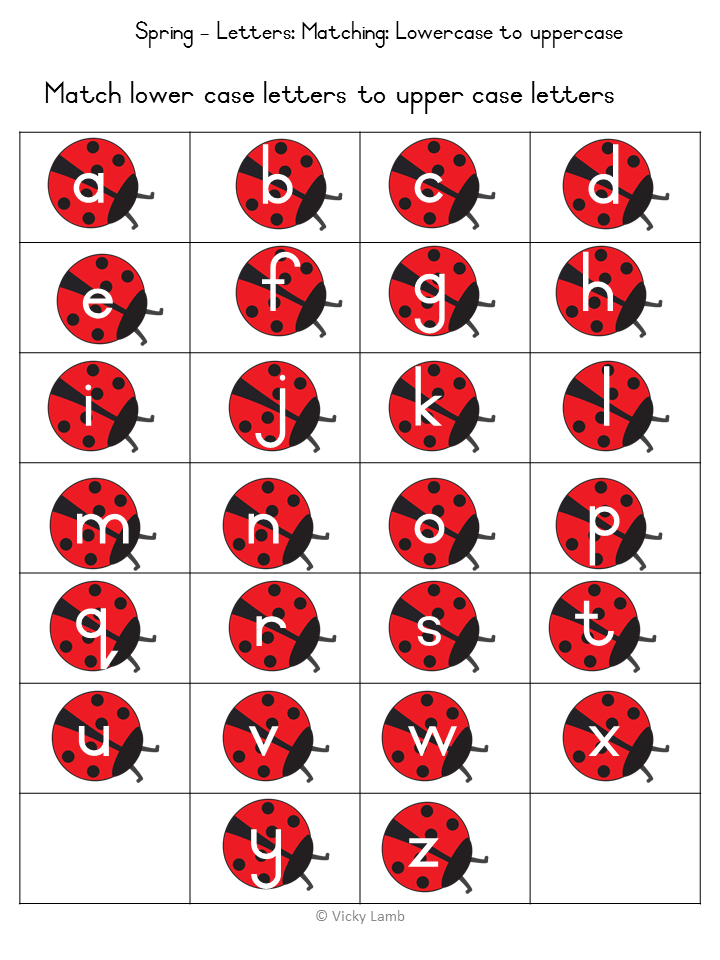
Use these to create ladybug themed
 flashcards
The binders do not have to be used strictly in the sense that you would like them to be used. You can also use them as different themed flashcards. Take the Spring themed bundle and create alphabet and number flashcards as well as colour flashcards. 

Or create snail themed flashcards.
Play games
You can play games, such as snap, or even memory with what is included in the bundle. Again, print and laminate what you need and you have an instant themed game for your class. Remember, if you have different levels of groups in your class, while you are focusing on one group, you may be able to keep the other group occupied with a game. Or, use the game as a fun reinforcement activity of a concept you have been teaching. I always find games seem to help get the concept across.

If you have any more ideas, please feel free to share them in the comments below.


Friday, July 4, 2014

Why I no longer use time-out in the classroom


As teachers we have all heard how important it is to establish discipline in your classroom. And it is! However, it is also just as important to know HOW to establish a culture of discipline in your classroom.

Too much, and you will crush personalities, too little and your learners will run riot in their  classroom. So, how do we establish a balance of just enough and what types of discipline should we be using.
There are various points about discipline that we are always taught use, one of these being consistency. But, does this mean consistency for the whole class? One punishment for one crime? I disagree.

Children are unique individuals, just as adults. We all have our own belief systems and our own morals, and so do children. We want to help these children develop their personalities, and develop their morals and belief systems, and in order to achieve this we need to give them the tools to help them achieve. And, so I no longer use time-out in my classroom.

Why? Well, when you think about it, what is time-out actually achieving in a work environment? Nothing. You are allowing that child to get out of the work they are supposed to be completing, you are almost rewarding them, and saying to them, don’t worry, you can come back to this later. Some children, may purposefully look for ways to get themselves into a time out. It prolongs task completion, and the child ends up resenting you, as they still have to do the work later on.

Yet, what other methods should we be using? Well, how do you get yourself to complete a task you do not want to do? We use rewards, if I finish this task, I will let myself read some more of my book, if I quit smoking, I can save up some money to buy that really expensive gadget I want.

And now, I would like to challenge you all to use this in your classroom. When you have a child who does not want to complete a task, put a positive spin on it. If you complete your maths work, you may have 5 extra minutes of playtime, if playtime is what they enjoy. If you have a child who enjoys reading, give them extra reading time. Reward them for good and stop punishing them for the bad behaviour.

I also just want to say, that time out does have its place. In the playground and at home, but let us stop using negative punishment in the classroom and start rewarding, and providing an environment in which to reward.